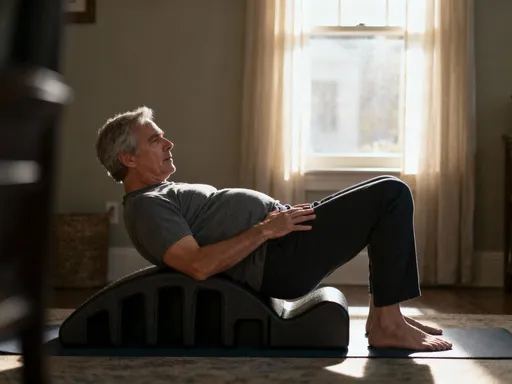
How I Moved Again: Real Talk on Physical Therapy Exercise Techniques
After weeks of stiffness and frustration, physical therapy changed my recovery. It wasn’t magic—just smart, science-backed movement done consistently. I’ll walk you through the exercise techniques that actually helped me regain strength and flexibility. This isn’t medical advice, but a personal look at how guided movement rebuilds function. If you’re healing from injury or surgery, this journey might feel familiar—and hopeful. Many women in their 30s to 50s face physical setbacks due to repetitive strain, aging joints, or post-surgical recovery, often feeling isolated in their discomfort. Yet, with the right approach, the body can regain mobility, reduce pain, and restore confidence in everyday movement. This is a story of real progress, grounded in principles supported by rehabilitation science and the quiet determination of showing up, day after day.
The Breaking Point: When Pain Changed My Daily Life
It started with a simple misstep—a twist on a sidewalk curb that turned into a lingering ache in my lower back. At first, I dismissed it as a pulled muscle, expecting it to fade within days. But weeks passed, and the discomfort deepened, spreading into my hips and radiating down one leg. Simple tasks like bending to tie my shoes, lifting a grocery bag, or even standing up from a chair became cautious maneuvers. I found myself rearranging my life to avoid movements that triggered pain, which only made things worse. The emotional toll was just as heavy. I felt frustrated, isolated, and increasingly helpless, watching my independence erode.
The turning point came when I could no longer carry my youngest child up the stairs without wincing. That moment shook me. I realized I wasn’t just managing pain—I was losing function. My instinct had been to rest completely, to avoid any activity that caused discomfort. But that approach, while well-intentioned, was based on a common misconception: that stillness heals. In reality, prolonged inactivity can lead to muscle atrophy, joint stiffness, and decreased circulation—all of which slow recovery. Another myth I had unknowingly believed was that healing meant waiting for pain to disappear before moving again. But modern physical therapy teaches the opposite: controlled, guided movement is often the best medicine. It wasn’t until I consulted a licensed physical therapist that I understood recovery wasn’t about enduring pain or avoiding it entirely, but about retraining my body to move safely and efficiently.
What Physical Therapy Really Is (And Isn’t)
Before my first appointment, I assumed physical therapy was just a series of stretches and exercises handed out like a generic workout sheet. I was wrong. Physical therapy is a clinical discipline grounded in biomechanics, neuroscience, and evidence-based practice. My therapist began with a comprehensive assessment—evaluating my posture, range of motion, muscle strength, and movement patterns. She observed how I walked, stood, and transitioned from sitting to standing. This detailed analysis allowed her to identify imbalances, weaknesses, and compensatory habits that were contributing to my pain. Only then did she design a personalized plan tailored to my body’s needs, not a one-size-fits-all routine.
One of the most important lessons was understanding what physical therapy is not. It is not about pushing through pain to prove toughness. The idea that “no pain, no gain” applies to rehabilitation is a dangerous myth. In fact, sharp or increasing pain during exercise can indicate tissue irritation or improper movement, potentially delaying healing. Instead, physical therapy emphasizes working within a safe zone—what professionals call the therapeutic window. This means feeling mild discomfort or muscle fatigue is acceptable, but pain should not escalate during or after an exercise. My therapist used tools like pain scales and movement feedback to ensure I stayed within this range. She also educated me on the difference between nociceptive pain (from tissue damage) and neurogenic pain (from nerve sensitivity), helping me interpret my body’s signals more accurately.
Another misconception was that physical therapy was only for post-surgical or athletic injuries. In truth, it benefits anyone recovering from prolonged inactivity, chronic pain, or age-related mobility decline. It’s not just about fixing a problem—it’s about preventing future ones. Through manual therapy, movement re-education, and targeted exercises, physical therapy addresses the root causes of dysfunction, not just the symptoms. It’s a collaborative process, requiring active participation and consistency. The therapist provides expertise and guidance, but the patient’s daily effort is what drives progress. This partnership, built on trust and communication, is what makes the process effective and sustainable.
Foundations First: Why Proper Form Beats Intensity
In the early sessions, I was eager to do more—more reps, more sets, more intensity. But my therapist consistently reminded me: form over volume. She explained that performing an exercise incorrectly, even gently, could reinforce poor movement patterns or strain healing tissues. For example, when I attempted a basic lunge, I was leaning forward and collapsing my knee inward. While it felt like I was working, I was actually placing unnecessary stress on my joint and bypassing the gluteal muscles meant to support the movement. With her guidance, I learned to engage my core, keep my chest upright, and align my knee over my ankle. The movement became smaller, slower, and more controlled—but far more effective.
Another eye-opening correction came during a glute bridge exercise. I had been doing it for years, assuming I knew the technique. But my therapist noticed I was overusing my lower back and hamstrings instead of activating my glutes. She taught me to gently squeeze the muscles at the top of the movement and hold for two seconds, creating what’s known as a mind-muscle connection. This subtle shift transformed the exercise from a generic lift into a targeted activation. I began to feel the burn in the right place—proof that the intended muscles were working. These small adjustments may seem minor, but they are the foundation of safe, effective rehabilitation. Poor form doesn’t just reduce benefits—it can lead to new injuries or prolong recovery. In contrast, mindful movement, even at low intensity, builds neuromuscular efficiency, strengthens stabilizing muscles, and promotes joint health.
My therapist often said, “You don’t get stronger by doing more—you get stronger by doing it right.” This principle applied to every exercise, from simple ankle pumps to complex functional movements. She used mirrors, tactile cues, and real-time feedback to help me refine my technique. Over time, proper form became second nature, reducing my risk of re-injury and increasing my confidence in daily activities. The lesson was clear: in physical therapy, precision matters more than effort. A single correctly performed repetition is more valuable than ten done poorly. This focus on quality over quantity is what allows the body to heal intelligently, not just reactively.
Core Techniques That Made a Difference
My recovery was built on four key categories of exercises: mobility drills, activation exercises, strength progressions, and functional movements. Each played a distinct role in restoring my ability to move freely and without pain. Mobility drills came first—gentle movements designed to improve joint range of motion and reduce stiffness. These included cat-cow stretches for the spine, ankle circles, and seated thoracic rotations. They were never strenuous, but doing them daily helped lubricate my joints, improve circulation, and prepare my body for more demanding activities. My therapist emphasized consistency: five minutes a day was more effective than thirty minutes once a week.
Activation exercises followed, targeting muscles that had become dormant due to pain or inactivity. These were often subtle—small contractions held for seconds—but crucial for reawakening neural pathways. For example, I practiced gluteal squeezes while lying on my back, focusing on isolating the muscle without engaging my hamstrings. Another key exercise was the dead bug, which challenged my core stability while protecting my lower back. These movements taught my brain to recruit the right muscles at the right time, a process known as motor control. Without this step, strength training would have been inefficient or even harmful, as stronger muscles could have pulled my body further out of alignment.
Strength progressions came next, gradually increasing load and complexity as my body adapted. We started with bodyweight exercises like wall squats and modified planks, then progressed to resistance bands and light dumbbells. Each new level was introduced only after I demonstrated proper form and control. For instance, I didn’t move from a two-legged bridge to a single-leg bridge until I could perform ten reps with perfect alignment. This step-by-step approach minimized risk and maximized gains. My therapist also incorporated eccentric training—slow, controlled lowering phases—which research shows is particularly effective for tendon healing and muscle strengthening.
Finally, functional movements bridged the gap between the clinic and real life. These exercises mimicked daily activities: sit-to-stand transitions, step-ups, and controlled forward bends. They weren’t flashy, but they were deeply practical. Practicing how to rise from a chair without using my hands, or how to lift a box with proper mechanics, restored my confidence in everyday tasks. My therapist often said, “We’re not training you to look good in the gym—we’re training you to live well.” This focus on function made every exercise meaningful, turning rehabilitation into a process of reclaiming independence.
The Mind-Muscle Connection: Training Your Brain, Not Just Your Body
One of the most surprising aspects of recovery was realizing how much of movement is controlled by the brain. After weeks of pain and altered movement patterns, my nervous system had learned to compensate—using stronger muscles to protect weaker ones, even when it wasn’t necessary. This created imbalances that needed to be unlearned. Neural re-education became a cornerstone of my therapy. It involved slow, deliberate repetition of simple movements to rewire motor pathways. For example, I spent days practicing how to stand up from a chair using only my glutes and quadriceps, resisting the urge to push off with my hands or lunge forward.
This process required intense focus. I had to pay attention to subtle cues: the feeling of my feet pressing into the floor, the engagement of my core, the alignment of my spine. My therapist encouraged me to perform these movements at half speed, exaggerating the correct form to reinforce the right pattern. Over time, what once required concentration became automatic. Walking, once a source of discomfort, gradually felt smoother and more balanced. I stopped limping, not because the pain vanished overnight, but because my body remembered how to move efficiently.
The mind-muscle connection isn’t just about awareness—it’s about trust. I had to learn to trust that moving, even with a history of pain, wouldn’t harm me. This psychological shift was as important as the physical changes. Fear of movement, known as kinesiophobia, is common after injury and can become a barrier to recovery. By pairing correct movement with positive reinforcement—like increased ease or reduced stiffness—I began to associate activity with healing, not harm. This mental retraining, combined with physical practice, created a powerful feedback loop: better movement led to less pain, which led to more confidence, which led to more movement. It was a cycle of progress, built on patience and persistence.
Building a Routine That Fits Real Life
Consistency was the key to my progress, but fitting therapy into a busy life wasn’t always easy. I had work, family responsibilities, and household duties competing for my time. The solution wasn’t finding large blocks of time, but integrating short, focused sessions into my daily routine. My therapist helped me design a plan that required only 15 to 20 minutes, two to three times a day. I did mobility drills in the morning while waiting for coffee, activation exercises during lunch, and strength work in the evening while watching TV with my family. These micro-sessions added up, keeping my body engaged without overwhelming my schedule.
Rest days were also part of the plan. Recovery isn’t just about movement—it’s about allowing tissues to repair and adapt. I learned to listen to my body and take a day off when needed, especially if I felt excessive soreness or fatigue. Tracking progress helped maintain motivation. I kept a simple journal, noting improvements like “bent down to pick up laundry without pain” or “walked a full mile without stopping.” These small wins, often overlooked, were powerful reminders of how far I’d come. My therapist also used objective measures—like increased range of motion or improved balance tests—to show progress that wasn’t always visible day to day.
Technology helped too. I set reminders on my phone for exercise times and used a fitness tracker to monitor daily steps, ensuring I stayed active without overdoing it. Having a routine made the process feel manageable, even on stressful days. The most important factor was commitment, not perfection. Missing a session wasn’t failure—it was human. What mattered was returning to the routine the next day. Over time, the exercises became a natural part of my life, like brushing my teeth or drinking water. This integration turned rehabilitation from a chore into a habit, one that supported long-term health and resilience.
When to Push and When to Pause: Listening to Your Body
One of the hardest skills to develop was discerning between productive effort and harmful strain. Not all discomfort is bad—muscle fatigue and mild soreness after exercise are normal signs of adaptation. But sharp, stabbing pain, especially in a joint or along a nerve pathway, is a warning signal. My therapist taught me to use the “two-hour rule”: if pain increased during exercise and remained elevated two hours afterward, I had likely done too much. In those cases, scaling back was not a setback—it was smart recovery. She also emphasized the importance of rest as an active part of healing, not a sign of weakness.
There were days I felt eager to do more, to speed up progress. But rushing often led to setbacks. Once, I added too many repetitions to a new exercise and woke up with increased stiffness. That experience taught me patience. Healing is not linear—some days bring gains, others bring plateaus or minor regressions. What matters is the overall trend. My therapist reminded me that tissue repair happens gradually, often in phases: inflammation, repair, and remodeling. Each phase requires different types of movement and rest. Trying to force progress could disrupt this natural process.
When in doubt, I learned to consult my therapist. This journey wasn’t meant to be walked alone. Professional guidance ensured I stayed on track and avoided mistakes that could prolong recovery. She adjusted my program based on my feedback, progress, and any new symptoms. This collaborative approach provided both accountability and reassurance. It also protected me from misinformation—there’s no shortage of exercise videos or advice online, but not all of it is safe or appropriate for someone in recovery. Having a trusted expert to turn to made all the difference.
In conclusion, physical therapy transformed my relationship with movement. It wasn’t about quick fixes or extreme workouts, but about consistent, intelligent effort guided by science and personalized care. I regained strength, flexibility, and confidence—not overnight, but through daily commitment. The techniques I learned—proper form, mindful movement, functional training, and body awareness—continue to support my long-term health. Recovery is not a destination, but an ongoing practice of listening, adapting, and showing up for yourself with compassion. If you’re on a similar path, know this: healing is possible. With the right support and the willingness to start small, you can move again—stronger, smarter, and more in tune with your body than ever before.